I had the privilege of traveling to the great city of New York a few years ago and visiting this large metropolis was an awakening experience for me especially in light that I was from a relatively small town in Canada. You get a real sense of awe when gazing upon the grandeur of the Big Apple. Whether Its countless skyscrapers, big flashy signs, the variety of delicious foods, its grand shopping districts or simply the sheer volume of people travelling through its streets, being in New York can take your breath away. It’s also well-known as a center for art, music, and theatre (and sometimes combined) and the best artists in the world flock there to be noticed and it’s not an exaggeration to say that it is the centre for commerce and business in the United States.
Another noticeable observation I made during my visit was the diversity of religion. Much like their shopping district, there was something there for everyone. Various established religious beliefs were openly present whether in their grand edifices or by those in the streets trying to make a sale. One thing that has crossed my mind when thinking back about my experience in New York is how a person would even attempt to start a church in the Big Apple. Imagine the intimidation of walking into a city within such a soup pot of various beliefs and attempting to establish your own. Now, for a moment, try to picture yourself entering this metropolis preaching a message that goes against the establishment so much so that, not only are you riling up the local temple priests, Rabbis, or imams but you now have the mayor and governor attempting to throw you out. All because your message is more than simply promoting an agnostic yoga class. Imagine that you’re preaching that there is only one God in a city where the established belief is that there is a pantheon of gods, and every single one of them is legitimate. Yet, you are proclaiming a Messiah who is calling on them to repent from their sins and to embrace Him as the only way to be right with the true living God. Associated with this monotheistic belief is the proclamation of a doctrine that not only are these other gods false but that worshipping images of them is sinful in a city where a large part of people’s income is selling idols. But not only this, you’re also telling the government officials that they’re not in charge. You’re establishing the fact that Jesus is Lord over them, and not their Democratic representative. Needless to say, you wouldn’t receive a warm welcome and imagine how intimidating it would be for you to set up shop there.
The City of Ephesus
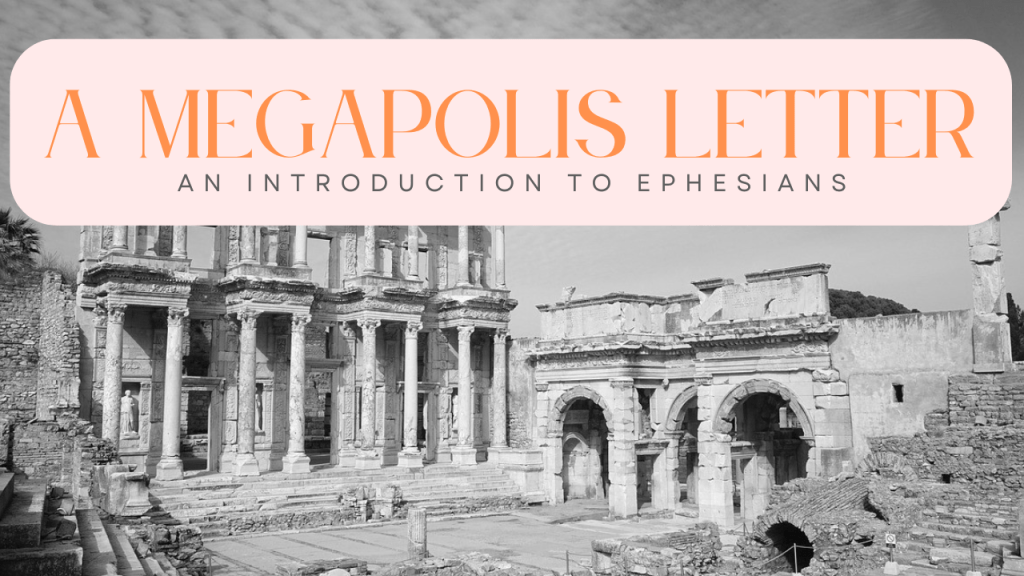
Today, the ancient city of Ephesus is known as Selcuk located in Turkey. In its heyday, it was much like New York, a wealthy megapolis full of grandeur and upscale pagan culture. The city boasted of an extraordinary harbour able to dock many large ships which provided it with a healthy economy. In addition, Ephesus also connected many highways which made it a very important commercial town and hence it was a suiting abode for many rich elites. The city was known for its superior Greek philosophy and people flocked to attain wisdom from its scholars. It also boasted of one of the most desired libraries in all the land.
Ephesus was especially renowned however for the centrality of its pagan worship. It was a center for gathering in the worship of pagan deities in the temple of Artemis (shrine of Diana) which in its day was considered as one of the seven wonders of the ancient world. The locals were quite persuaded that they were the guardians of this temple and that her image fell from the sky. The bible speaks of Ephesus in this way:
After quieting the crowd, the town clerk *said, “Men of Ephesus, what man is there after all who does not know that the city of the Ephesians is guardian of the temple of the great Artemis and of the image which fell down from heaven? (Acts 19:35).
For those who enjoy stateliness and big flashy places of worship, they would certainly have been in awe. When the first Christians arrived in this city, they were surrounded by vast arrays of pagan multiculturalism dominated by a plurality of gods. One of the big business opportunities in the city was to sell pagan idols of Artemis and any disruption in that endeavour brought some local retribution. We once again read about this in the book of Acts:
About that time there occurred no small disturbance concerning the Way. For a man named Demetrius, a silversmith, who made silver shrines of Artemis, was bringing no little business to the craftsmen; these he gathered together with the workmen of similar trades, and said, “Men, you know that our prosperity depends upon this business (Acts 19:23-25).
Christians had a lot of work to do to spread the good news of Jesus’ death, burial, and resurrection. Along with this came the challenge of spreading their views of monotheism and the Lordship of the Son of David in a polytheistic city which thrived in Emperor worship.
Paul in Ephesus
As daunting as it was, the apostle Paul entered the city with his marching orders in hand (Matthew 28:18-20) as an ambassador of Jesus Christ amongst all this intimidation. Paul visited the Ephesians during his 2nd missionary journey, after leaving a couple there by the name of Priscilla and Aquila to proclaim Christ to the Jews in their synagogues.
They came to Ephesus, and he left them there. Now he himself entered the synagogue and reasoned with the Jews. When they asked him to stay for a longer time, he did not consent, but taking leave of them and saying, “I will return to you again if God wills,” he set sail from Ephesus. (Acts. 18:19-21).
During that stint, he proclaimed to them repentance towards God and faith in our Lord Jesus Christ (Acts 20:21). He then left to make his way to Caesarea returning on his third missionary journey where he spent approximately 3 years there (Acts. 20:31). He found disciples of John to whom he bestowed the Holy Spirit (Acts 19:1-7) and spent three months reasoning and persuading the Jews in the synagogues about how the kingdom of God was at hand but with no success. He then made his way to the school of Tyrannus, a lecture hall, in order to reason with them and demonstrate to the wisemen of the city that the Kingdom had come to both Jews & Greeks (Acts 19:8-10). In those days, the kingdom of God was being established by miracles (Acts 19:11-16) and many repented and believed.
This became known to all, both Jews and Greeks, who lived in Ephesus; and fear fell upon them all and the name of the Lord Jesus was being magnified. Many also of those who had believed kept coming, confessing and disclosing their practices. And many of those who practiced magic brought their books together and began burning them in the sight of everyone; and they counted up the price of them and found it fifty thousand pieces of silver. So the word of the Lord was growing mightily and prevailing. (Acts 19:17-20).
Stirring The Local Business Owners
His message in persuading people not to commit the sin of idolatry (Acts 19:23-27) was disturbing some local businesses who were profiting from making idols for the shrine of Dianna. If people converted and worshipped the God of the Christians, there would no longer be any room for the sale of idols. Two believers, Gaius and Aristarchus were dragged out of a theatre because of this and most in attendance that day wanted to make sure that everyone knew they were siding with Artemis rather than Yahweh (Acts 19:28-34) in hopes of returning to business as usual. The uproar was so intense that they were being accused of rioting (Acts 19:40).
Warning the Shepherds
The Christians would eventually turn the city upside down with their beliefs especially in light of how faithfully they held to them. If persecution doesn’t achieve the demise of a religion, an internal infiltration to pollute its central teachings might do the trick. Paul was upfront with the elders that they needed to be on guard because from within their ranks the wolves would come to devour the congregation (Acts 20:28-30). It is unquestionable that he cared deeply for the believers in Ephesus and had grown very close to them (Acts. 20:29-38).
An Apocalyptic Church
Another mention of the Ephesian congregation in the bible is by the apostle John in his writing of the Book of Revelation (Revelation 2:1-7). The message of the apocalypse to the church in Ephesus leaves us with the impression that it had experienced much turmoil. This was due to some meddling from false teachers and the repercussions it experienced from standing firm for the truth. They acted in the spirit of the Bereans in that they had “put to the test those who call themselves apostles and they are not”. The strength of the assembly was found in their ability to hold firm to the teaching they received from the apostle Paul (Acts 20:28-32) and specifically his warning against false teachers creeping in (1 Timothy 1:3-11; 4:1-8).
There is much that churches today can learn from the believers in Ephesus. Many congregations have long lost their desire to filter out false teaching and its about time they get back to that. But their incredibly efficient ability to deal with false teachers had lost something else of great value along the way, mainly their “first love”. The apostle John’s apocalyptic warning exhorted them to be mindful of who they were in the beginning when they were a vibrant witness for the Lord Jesus.
A Mega Task
While it certainly can be intimidating sharing the gospel in your local community, consider that it’s far less daunting than entering into a city where there are no believers, where people have never heard of Christ and especially a place where you know that you will rile up the crowds with your message to the extent of perhaps being lynched. Not just an attack from the locals, but likely persecution from the governing bodies.
In Canada, we currently live in a free country with the liberty to bring the gospel to our communities and we should take advantage of this privilege that the Lord has granted to us in this generation. The task to bring the gospel of the kingdom to the nations (including our own) is no less urgent today than it was in the 1st century. The kingdom is to be proclaimed to all the nations and when we look around us, we can see that we still have a long way to go. This will not happen if we are hiding in our churches and not out proclaiming the message openly to the public of the glorious hope that is found in Jesus Christ and how to live in abundance in Him.
 The Moncton Herald