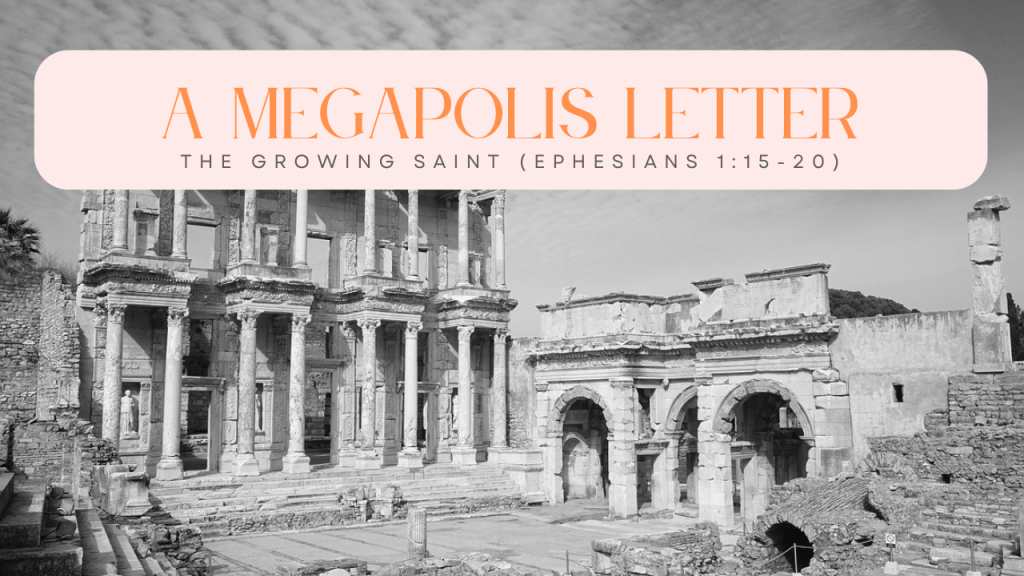
If the great apostle Paul were to write an epistle about your church, what would he pen? What would he have to commend and condemn within your congregation? While I don’t underestimate just how cliché these questions are, you must admit that there is at least some legitimacy to asking them. I mean, aren’t these the true ecclesiastical question of the ages? Some have tried to take a more personal approach to this question by asking what would Saul of Tarsus say to yours truly? How would he pray on your behalf and what encouragement would he share with you to help you navigate in this world? Believe it or not, I’ve heard these questions posed on many occasions. While some may scratch their chin like wisemen of old and ponder this inquiry until the utter reaches of the night, I’m prone to think he wouldn’t have penned anything overly different than what we find in scripture. As an example, the setting in Asia Minor was really no different than today. As we noted at the beginning of this series, believers in Jesus Christ were held in low esteem and told that their heads were buried in the sand. They experienced insults, demeaning slander, a few beatings followed by jail time and death. Politicians, state funded religious leaders, and Greek philosophers were quick to debase this monotheistic desert religion which focused upon a dead Messiah who died for their sins and rose from the dead. No different than our modern-day politicians in Canada with their scientists and state funded ideologues who continue the tradition of thinking that we’re a little nutty for still believing this today. The early church was in a spiritual war and let’s face it, so are we! So, in other words, you’ll find that the apostle Paul gave you lots to work with especially in his epistle to the Ephesians.
The Text
For this reason I too, having heard of the faith in the Lord Jesus which exists among you and your love for all the saints, do not cease giving thanks for you, while making mention of you in my prayers; that the God of our Lord Jesus Christ, the Father of glory, may give to you a spirit of wisdom and of revelation in the knowledge of Him. I pray that the eyes of your heart may be enlightened, so that you will know what is the hope of His calling, what are the riches of the glory of His inheritance in the saints, and what is the surpassing greatness of His power toward us who believe. These are in accordance with the working of the strength of His might. (Ephesians 1:15-20)
Thanksgiving
As we continue through this precious letter, Paul is at a point within it where he’s focused on sharing information he heard about the recipients of the letter. He writes another lengthy sentence to express his thanksgiving for them. Paul found joy in them because he heard of the faith in the Lord Jesus which exists among you (v.15). The centrality of the faith they practiced was found in none other than their Lord and Saviour. What makes our faith unique is that it is anchored in a person, not in a philosophy or political movement. These things change on a regular basis, but the Lord doesn’t. The apostle further expresses his gratitude by extending it to their love being poured out upon all saints. A reference to describe tearing down ethnic boundaries between the Jews and Gentiles. The confines of race, ethnicity, sex, or age do not come crumbling down because they are written into law, but because the hearts of men are changed and made to love one another. There is a unifying factor brought about through a sacrificial love (Revelation 5:9). The gospel is for all men, Jew and Gentiles (the nations) and it has power to bring those who were at odds together.
The Prayer
Times were tough for Gentiles in Asia Minor. In Ephesus, they would have given up the worship at the temple of Artemis and in return, many of its rituals. It was so popular and engrained in their society that these believers became literal outcasts for no longer participating. They needed to be reaffirmed in what they’d been called to and to know that they were valuable in the presence of God. The apostle’s intercession was towards a desire that they would come to grow in the blessings found in that eulogy. There was no room to become stagnate or complacent especially in the situation they were facing. To continue in their faith, they needed to flourish, and his desire was to see them increase in the wisdom and revelation of Christ. He “makes mention” of them, another way of saying that he was praying for them (Romans 1:9; 1 Thessalonians 1:2; Philemon 4). This wasn’t your passive type of prayer but petitions with passion. Prayers of intercession are a significant weapon in the spiritual warfare facing the believer. A part of the armour of God is prayer for each other:
praying always with all prayer and supplication in the Spirit, being watchful to this end with all perseverance and supplication for all the saints— and for me, that utterance may be given to me, that I may open my mouth boldly to make known the mystery of the gospel, for which I am an ambassador in chains; that in it I may speak boldly, as I ought to speak. (Ephesians 6:19-20)
Wisdom of a Different Kind
Paul’s prayer is directed at none other than the God of our Lord Jesus Christ, the Father of glory. The Father of Glory demonstrates the influence of the Old Testament in Paul’s thinking where Yahweh is referred to as the God of Glory (Psalm 29:3) and the King of glory (Psalm 24:7,10) while interestingly Christ is called the Lord of glory (1 Corinthians 2:8; James 2:1). This glorious God is the living God who demonstrates His glory through the person of Jesus Christ and who will glorify His people (Romans 8:30).
Previously, Paul articulated in his eulogy that they’d received blessings of knowledge and revelation and how Yahweh lavished on us in all wisdom and insight. You would think that lavishing would be enough, but not for Paul. His desire is that they come to an even better understanding of Him by receiving the Holy Spirit of wisdom and revelation. Surrounded by Greek philosophers and wisemen, their wisdom was believed to be inferior to those of the local debater but that wasn’t the case. Paul also writes an extensive exhortation to the Corinthians because of this same matter. They’d received a mystery and wisdom revealed to them as believers, but this knowledge was not revealed to the leaders and wisemen of this age. While the Greeks were flicking their brains at them, Paul writes:
Yet we do speak wisdom among those who are mature; a wisdom, however, not of this age nor of the rulers of this age, who are passing away; but we speak God’s wisdom in a mystery, the hidden wisdom which God predestined before the ages to our glory; the wisdom which none of the rulers of this age has understood; for if they had understood it they would not have crucified the Lord of glory; but just as it is written,
“Things which eye has not seen and ear has not heard,
And which have not entered the heart of man,
All that God has prepared for those who love Him.”For to us God revealed them through the Spirit; for the Spirit searches all things, even the depths of God. For who among men knows the thoughts of a man except the spirit of the man which is in him? Even so the thoughts of God no one knows except the Spirit of God. Now we have received, not the spirit of the world, but the Spirit who is from God, so that we may know the things freely given to us by God, which things we also speak, not in words taught by human wisdom, but in those taught by the Spirit, combining spiritual thoughts with spiritual words. But a natural man does not accept the things of the Spirit of God, for they are foolishness to him; and he cannot understand them, because they are spiritually appraised. But he who is spiritual appraises all things, yet he himself is appraised by no one. For who has known the mind of the Lord, that he will instruct Him? But we have the mind of Christ. (1 Corinthians 2:6-16)
This is how we attain the knowledge of God, through the Spirit and the revelation and wisdom that He brings. Remember, while revelation and knowledge are a blessing, we need to use this knowledge and revelation with wisdom. Wisdom is not knowledge but the proper usage of knowledge.
The Eyes of the Heart
Paul borrows again from the Psalms in the expression eyes of the heart (Psalm 13:3; 19:8). The eyes of the heart are not the eyes of the head. Paul is looking for their enlightenment to be more than just head knowledge. This insight is, as Paul says elsewhere: For God, who said, “Light shall shine out of darkness,” is the One who has shone in our hearts to give the Light of the knowledge of the glory of God in the face of Christ. (2 Corinthians 4:6). These believers were once in darkness (Ephesians 4:18) and have received the light of Christ. Paul prays that this light will shine even greater in their hearts in three ways: (1) so that they will know the hope of His calling (2) what the riches of the glory of His inheritance in the saints are and (3) what is the surpassing greatness of His power toward us who believe. We will deal with the first two and save the third for the next post.
The Called Man
The first of these is the hope of His calling. Paul utilizes this language later in the epistle in the context of unity (Ephesians 4:4). The difference here in v. 18 is that we are not speaking of our calling but of His calling. This isn’t a personal calling to some philanthropy but a divine call to salvation (Romans 8:28-30) and of course this is our hope in Christ. This expectation of His calling is described in many ways in Paul’s epistles including our salvation (1 Thessalonians 5:8), our resurrection (1 Corinthians 15:52-55) and eternal life (Titus 1:2; 3:7). They received a special place as the people of the living God through the awakening they’d received through the Holy Spirit and being made alive in Christ (Ephesians 2:7). He wishes for them to grow in their understanding of this special place of honour in Jesus Christ.
God’s Inheritance
The second of these is that they will know further the riches of the glory of His inheritance in the saints. Paul continues the theme of accenting the riches, but this time not with a focus upon individual wealth but the riches of God. What we don’t want to miss is that the inheritance is us, the Saints! As mentioned in v.11, we are a heritage and in return are the inheritance of God. We have become His possession, and not only Jewish believers receive this blessing but Gentiles also, all those who have been sealed by the Spirit of God. Paul wants them to understand just how valuable they are to Him because they are those whom He chose and who were purchased for Him through Christ. F.F. Bruce expresses this beautifully:
That God should set such a high value on a community of sinners rescued from perdition and still bearing too many traces of their former state, might well seem incredible were it not made clear that he sees them in Christ, as from the beginning he chose them in Christ[1].
Peter spoke of believers being a chosen race, a royal priesthood, a holy nation, a people for God’s own possession, so that you may proclaim the excellencies of Him who has called you out of darkness into His marvelous light (1 Peter 2:9). Notice that the purpose behind being God’s possession is so that we can proclaim the excellencies of Him. We are not meant to be silent in proclaiming Him and all His attributes, His righteousness, His mighty works and His Gospel. If we are to boast about anything, it shouldn’t be in ourselves or in others but in Christ and God since we are their possession (1 Corinthians 3:21-23).
What would Paul Say to You?
I’m prepared to admit that the apostle Paul would have penned unique letters to each of us and to our respective congregations. But I believe that there are themes in the valuation of these few verses that he might have been keen to add. Firstly, he may have reminded you that the gospel is for all men, whatever ethnicity one belongs to, whether man, woman, child, and whatever your background, the gospel has power to bring people together.
If you are living as a societal outcast, remember who you are in Christ. You are part of the called, a divine calling unto eternal life and in return you are most welcomed in the presence of God.
If you feel that you’ve been surrounded by our modern-day sages and scientific minds who are constantly mocking your faith, just remember that their wisdom comes from the minds of men, while your wisdom comes from a divine source. But also, don’t forget that God is looking for your enlightenment to be more than just head knowledge, but that your heart affections would rejoice in this wisdom.
Finally, I believe Paul wouldn’t want you to miss the fact that not only will you receive an inheritance in glory, but ultimately you are so valuable that you can be called God’s inheritance, His treasure and that which He values more than anything.
[1] New International Commentary on the New Testament: The Epistles to the Colossians, To Philemon and To the Ephesians, Eerdmans, F.F. Bruce, 1984, Page 270
 The Moncton Herald