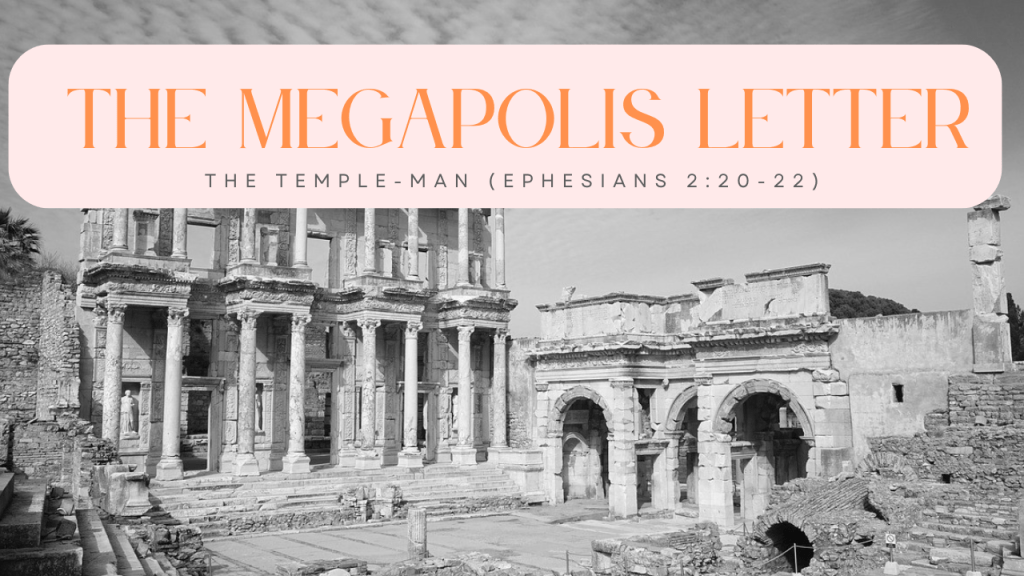
Places of worship have the tendency to arouse a deep sentimentality in people who have bowed before their God within its walls. Christians who have worshipped in the same church for many years cannot help but experience some heartfelt connection when they enter its doors. That connection is so profound that if the edifice were to suddenly be inaccessible or God forbid destroyed, nothing short of a gut-wrenching sorrow would ensue. Even while Christians properly accentuate the fact that the church is not the building, but the people, they cannot help but associate a certain spiritual romanticism to it. In some sense, this seems quite natural since much like any symbol, it conveys a connection with the worship that is so dear to the worshipper. This is not so different from believers in the first century. To the Gentile believers, there was a certain emotional connection to their childhood place of worship. These were not churches but usually in the form of the local pagan temples they grew up worshiping in. To the Jewish believers, they rendered some ancestral sentiments towards the temple in Jerusalem. Both these parties may have struggled when the other group pointed out the grandeur of these beautiful temples. But under the New Covenant, the worship of God would take on something much more beautiful and on a much greater scale.
The Text
having been built on the foundation of the apostles and prophets, Christ Jesus Himself being the corner stone, in whom the whole building, being fitted together, is growing into a holy temple in the Lord, in whom you also are being built together into a dwelling of God in the Spirit. (Ephesians 2:20-22)
Apostles & Prophets
At this point in the epistle, Paul now expands his attempt to show his recipients their blessed position. This time, rather than focusing his attention on a new humanity, he posits the reality that they’d become a new place of worship. The new life in Christ meant that they’d become the new temple where God’s Spirit would dwell. For people who associated worship with the temple of Artemis, and others the temple in Jerusalem, nobody really saw this coming. The foundation for this spiritual building was laid by the apostles and prophets with the Lord Jesus being the chief cornerstone. Apostles were appointed by Christ and in return given the authority to speak on his behalf.
The prophets are a bit trickier to interpret since the grammar seems to link both the apostles and prophets together. In this instance, prophets should be defined as those who taught the revelatory principles of the New Covenant faith and who explained the mysteries of Christ (3:5). They’re membership into the family of God, citizenship and the dwelling place of God are all legitimate because they come from those who have the authority to reveal the purposes of God. Both these groups have revelatory functions in that they uncovered mysteries to the church as we’ll see in Ephesians 3:5.
The Cornerstone as the Foundation & the Temple
But the cornerstone, the most significant part of the foundation is Christ Himself. This was foretold by Isaiah that “Behold, I lay in Zion a stone for a foundation, A tried stone, a precious cornerstone, a sure foundation; Whoever believes will not act hastily. (Isaiah 28:16). The cornerstone was the most significant part of a structure because it served as a marker that would guide the building the rest of the edifice. It was the basis for all of its measurement and construction. The quality of the temple was dependent upon its stability and how precisely they used that cornerstone. Jesus is the divine stone that was cut out without hands that would utterly crush all the kingdoms of the earth and would become a great mountain and fill the whole earth (Daniel 2:34-36). This is the stone upon which the kingdom of God is built, and this kingdom will never be destroyed but consume all other kingdoms (Daniel 2:44-45).
But there is a noticeable dynamic in scripture. While here Christ is called the cornerstone, Paul seems to indicate elsewhere that He is the foundation. Further to this, the Lord refers to Himself as the temple (John 2:20-22). He was the true fulfilment of the purpose of the OT temple whereas He was the pure embodiment of the dwelling place of God on earth. This is the true place where the Shekinah glory would reside. God intended to dwell with His people under the OT (Exodus 25:8) but Jesus takes on the persona of this glory and tabernacles and brings God’s dwelling place amongst the people of God (John 1:14). He was the place where the people of God could draw near to worship in Yahweh’s presence.
A Temple on the Move
The OT tabernacle and temple were mere types or shadows of the greater and more glorious presence of God to come. The worship of God would no longer be limited to the boundaries of Israel. These geographical limitations were removed for His people to worship Him in spirit and truth (John 4:20-26). But God didn’t intend His Spirit to remain in Israel, it was to go forth to the nations. Believers in Christ would bear the responsibility of taking the Spirit of God and tabernacling all over our world. Paul refers to the Corinthians in this way:
Do you not know that you are a temple of God and that the Spirit of God dwells in you? If any man destroys the temple of God, God will destroy him, for the temple of God is holy, and that is what you are. (1 Corinthians 3:16-17)
After Christ’s death and the outpouring of the Holy Spirit, the nature and function of the temple is now associated with those who are “In Christ”, the true temple. This temple would far exceed any other temple from the past or the future. In v.15, caution is expressed to build this temple upon precious materials like Gold, silver and bronze rather than wood and hay which gets its background from Solomon’s temple (1 Chronicles 29:1-3). It would be a temple built with living stones as a spiritual house for a holy priesthood, to offer up spiritual sacrifices acceptable to God through Jesus Christ (1 Peter 2:4-5). Paul explicitly calls the believers in Corinth the temple of God and that the Spirit (as the presence of God) dwells within them. The Spirit of God would dwell internally in them wherever they are which would lessen the significance of Jerusalem and its temple. The apostles would bring God’s presence outside the borders of Israel to the nations!
Rabbit Trails
We should pause for a moment to consider the importance of this organic temple regarding its purity and separation from idols. Let’s spend a moment in 2 Corinthians:
Or what agreement has the temple of God with idols? For we are the temple of the living God; just as God said,
“I will dwell in them and walk among them; And I will be their God, and they shall be My people.
“Therefore, come out from their midst and be separate,” says the Lord. “And do not touch what is unclean; And I will welcome you. “And I will be a father to you, And you shall be sons and daughters to Me,”Says the Lord Almighty. (2 Corinthians 6:16-18)
The apostle Paul exhorts believers in Corinth not to bind themselves together with unbelievers. He uses the comparison of how Christ and Balial have no accord, or that the temple has no agreement with idols. The churches in Asia Minor needed to leave the former worship of their gods to transform into a purified and holy place. Amid this exhortation to the Corinthians, he explains that the believers in Corinth are the temple of the living God. The exhortation is to cleanse ourselves from all defilement of flesh and spirit, perfecting holiness in the fear of God (2 Corinthians 7:1). In 2 Corinthians 6:16-18, Paul shows that the OT temple promises to Israel would be fulfilled in believers and they needed to be on the lookout for potential pitfalls on uncleanliness. These OT quotations shouldn’t be taken lightly. The application of these promises was not fulfilled in ethnic Israel or looking to a rebuilt temple but in spiritual Israel consisting of both Jews & Gentiles. The first is especially noticeable in Ezekiel and Leviticus. We read that:
I will make a covenant of peace with them; it will be an everlasting covenant with them. And I will place them and multiply them and will set My sanctuary in their midst forever. My dwelling place also will be with them; and I will be their God, and they will be My people. And the nations will know that I am the Lord who sanctifies Israel, when My sanctuary is in their midst forever.”’” (Ezekiel 37:27-28)
Moreover, I will make My dwelling among you, and My soul will not reject you. I will also walk among you and be your God, and you shall be My people. (Leviticus 26:11-12)
Both these passages are relevant since the Leviticus text is in the context of refraining from having idols in the temple (Leviticus 26:1-2). If they obeyed, they would receive blessings such as full harvests (Leviticus 26:4-5), peace (Leviticus 26:6), victory over their enemies (Leviticus 26:7-8) and covenant blessing (Leviticus 26:9). He then promises to be their God and to walk among them then finishes the chapter with covenant blessings and curses based upon their obedience. The Ezekiel reference could also be primarily in the apostle’s mind in that the reference to a covenant of peace whereas the presence of God will be in the midst of the nations.
The second quotation is related to Isaiah 52:11.
Depart, depart, go out from there, Touch nothing unclean;
Go out of the midst of her, purify yourselves,
You who carry the vessels of the Lord. (Isaiah 52:11)
In the Isaiah passage, the redemption of Israel after the exile is the focus and it comes through the coming of the good news to them (Isaiah 52:3). This will be a restoration of Israel (52:8) through the comfort of the people (52:9) and the redemption of Jerusalem (52:9). This is all in the time when the salvation of Yahweh will be seen by the whole world (52:10). There will be a purification of those who carry the vessels (52:11). Paul is now applying this temple purification to those believers in Corinth in the 1st century and to us today.
The third quotation is found in several passages in the OT.
I will be a father to him, and he will be a son to Me; when he commits iniquity, I will correct him with the rod of men and the strokes of the sons of men (2 Samuel 7:14; 1 Chronicles 17:13)
“I will say to the north, ‘Give them up!’ And to the south, ‘Do not hold them back.’ Bring My sons from afar And My daughters from the ends of the earth (Isaiah 43:6)
“Lift up your eyes round about and see; They all gather together, they come to you.
Your sons will come from afar, And your daughters will be carried in the arms. (Isaiah 60:4)
The context of the passage in 2 Samuel is God’s dwelling place and how David desired to build Yahweh a house. Yahweh’s response was that David’s son would build this house for Him and in return Solomon erected the temple for God’s dwelling place among His people. But, Paul’s quotation demonstrates that David’s true Son, the Lord Jesus, came to build the true temple to fulfill the promises of 2 Samuel 7:14. He did so in the church! If the final Son of David came to erect this temple in this world, where is the need to build another? The Isaiah passages could point to the future coming of the Messiah gathering the sons and daughters from Jews & Gentiles especially in chapter 60 where it is associated with temple items (60:7,13)
I point this out because to those who envision an end-time temple in the distant future, there is an unfortunate potential to attribute blessings meant for the church to another. Remember, these were promises given to Israel and now applied to the Church, the true Israel!
A Growing Temple
While in the previous verse, putting together of the building in the past tense (“having been built”), the apostle now turns to address this building in the future tense in light of its growth. In Christ Jesus, the holy temple is experiencing continuous growth. It is being built as a unified holy entity. Believers who are indwelt with the Holy Spirit, together have become the temple and the final stone will only be laid when all the nations will come to the temple (Isaiah 66:18-20; Isaiah 2:1-2; Micah 4:1-5). In Christ, not only have the Gentiles flocked to the temple of the Lord, but along with the Jews, have become the temple itself. As the gospel goes out to the nations, the Spirit of God follows and in return the temple is being built stone by stone.
In a parallel, Paul concludes his argument relating to the unity of the saints by including the Gentiles (you also) into the temple alongside the Jews. In this case, Paul refers to the temple as the dwelling place of God, accentuating that this wasn’t just any temple but the temple of the God of the Jews. This is even more explicit in the latter expression since it was referred to in this way under the OT (1 Kings 8:13,39,43). Where the Spirit of God dwelt was considered as the temple, whether in the Garden of Eden, the tabernacle, the first & second temple or now in the church. God help us to keep it pure!
 The Moncton Herald